
A Journey Through Time in Cappadocia
Ancient cave dwellings, extraordinary landscapes, and a cultural heritage unlike anywhere else in Türkiye.
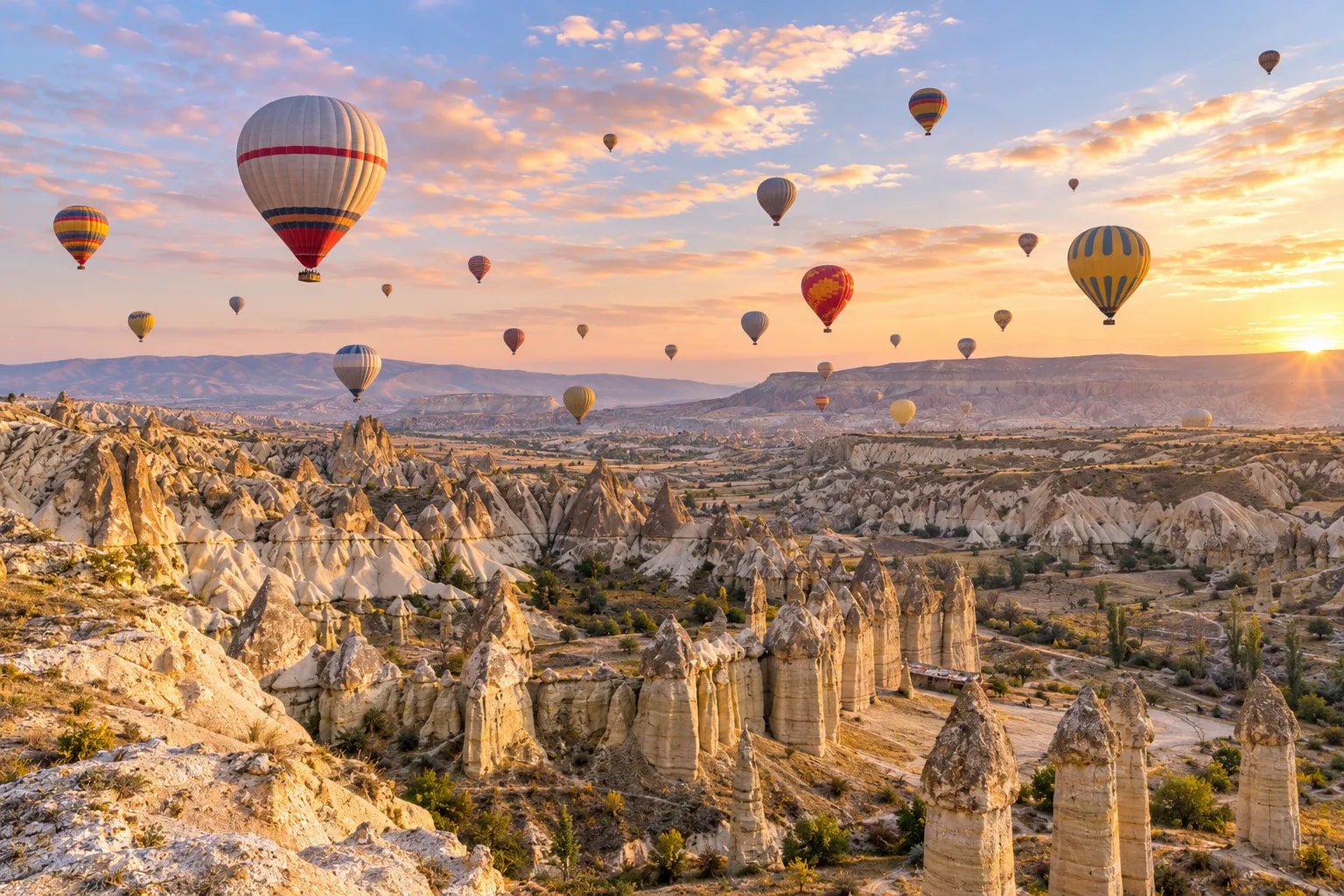
Cappadocia is a destination that seems almost impossible at first sight. Sculpted valleys stretch across the landscape, unusual rock formations rise from the earth, and centuries-old settlements are concealed within the region's soft volcanic stone.
Yet beyond its famous scenery lies a remarkable history of communities that adapted to this distinctive environment, creating homes, churches, and entire underground settlements.
To truly appreciate Cappadocia is to explore both its landscape and the stories hidden within it.
A Landscape Shaped by Nature
Cappadocia's extraordinary formations are the result of volcanic activity and millions of years of erosion.
Over time, wind and water shaped layers of volcanic rock into the pillars, cones, and valleys that define the region today. These formations, often called fairy chimneys, are especially striking around Göreme, Paşabağ, and the surrounding countryside.
The landscape changes throughout the day. Early morning brings soft light across the valleys, while the late afternoon reveals warm tones and dramatic shadows.
For travelers who enjoy photography, walking, or simply being surrounded by remarkable scenery, Cappadocia offers endless opportunities for discovery.
Beneath the Surface
Some of Cappadocia's most fascinating stories are found underground.
The region is home to extensive underground settlements, including Derinkuyu and Kaymaklı, where communities created interconnected rooms, passageways, ventilation shafts, and storage areas within the rock.
Above ground, the Göreme Open-Air Museum preserves rock-cut churches decorated with Byzantine frescoes, offering an extraordinary insight into the region's religious and artistic heritage.
These sites reveal how closely Cappadocia's inhabitants lived with the landscape, transforming natural formations into places of shelter, worship, and community.
The Art of Living in Cappadocia
The region's cultural traditions are just as compelling as its geological wonders.
In Avanos, pottery has been practiced for generations, supported by clay from the Kızılırmak River. Visiting a local workshop offers an opportunity to learn about the techniques and craftsmanship that continue to define the town.
Cappadocia's vineyards are another expression of its heritage. The region has a long history of winemaking, with volcanic soils contributing to its distinctive agricultural character.
Traditional cuisine, local crafts, and family-run establishments add depth to a visit, offering experiences that extend well beyond the famous viewpoints.
A Different Way to Stay
One of Cappadocia's most distinctive pleasures is the opportunity to stay in a cave hotel.
Many properties incorporate restored stone structures and rooms carved into the rock, combining traditional architecture with contemporary comfort.
The best accommodations preserve the atmosphere of their surroundings while offering beautiful terraces, attentive hospitality, and a peaceful retreat after a day of exploration.
The Magic of an Early Morning
Hot air balloon flights have become one of Cappadocia's most celebrated experiences, and with good reason.
When weather conditions permit, balloons rise above the valleys in the early morning, revealing the extraordinary scale and beauty of the landscape.
The experience is unforgettable, but it is only one chapter of Cappadocia's story.
Its greatest appeal lies in the combination of nature, history, craftsmanship, and a sense of place that remains entirely its own.
For travelers willing to explore beyond the familiar images, Cappadocia has much more to reveal.