
Beyond Ephesus: Discovering Türkiye's Ancient Heritage
Explore the civilizations, extraordinary archaeological sites, and remarkable stories that have shaped Anatolia.
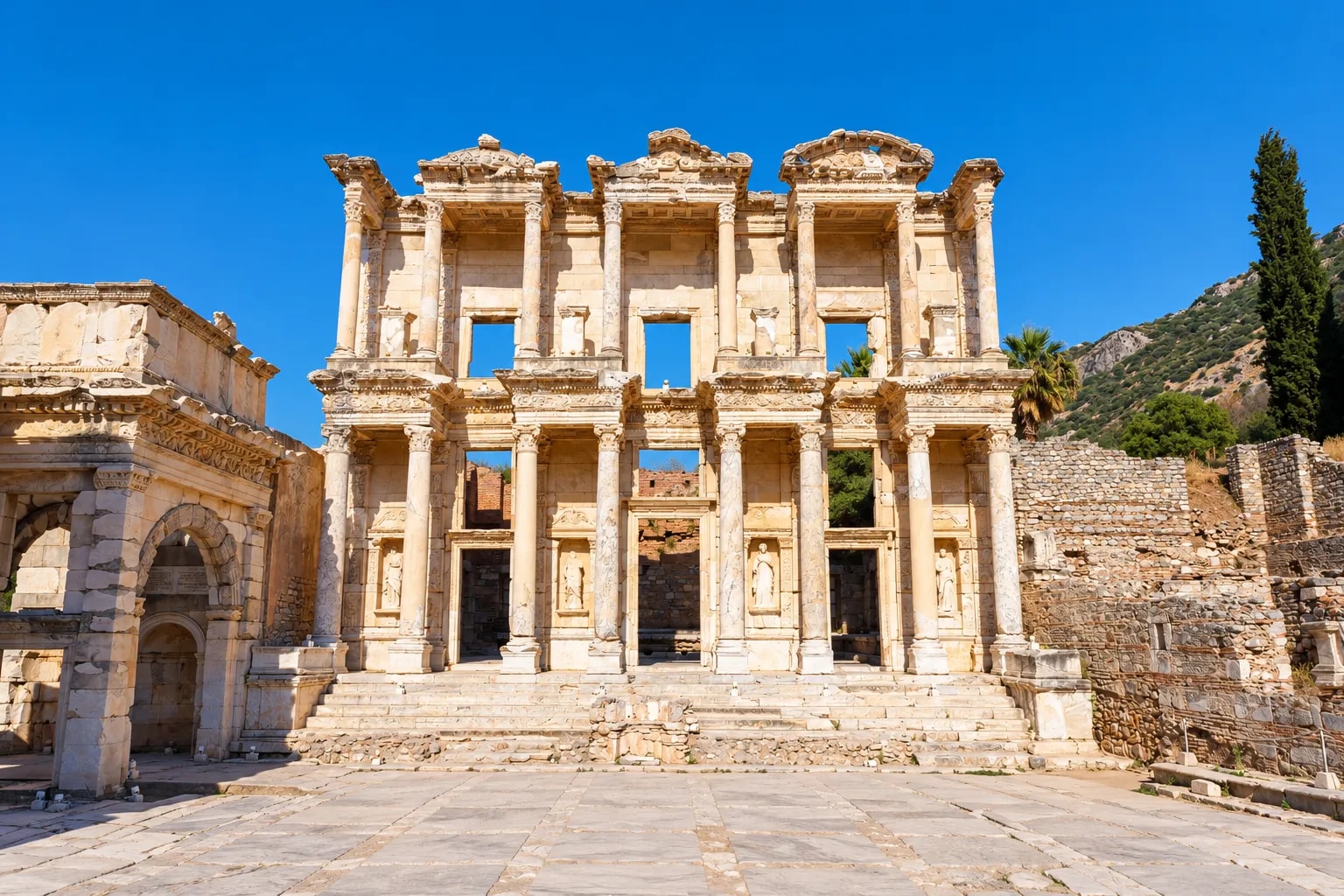
Few countries offer the historical depth and diversity found in Türkiye.
For thousands of years, Anatolia has been home to powerful kingdoms, prosperous trading cities, and civilizations whose achievements continue to influence the world today.
Greek, Roman, Byzantine, Hittite, and numerous earlier cultures have all left their mark on the landscape.
While Ephesus remains one of the country's most celebrated archaeological destinations, it represents only one chapter of a much larger story.
Ephesus: A Window into the Ancient World
Located near the modern town of Selçuk, Ephesus is among the best-preserved ancient cities in the Mediterranean region.
Walking along its marble streets reveals an extraordinary collection of monuments, including the Library of Celsus, the Great Theatre, and the remains of public baths, temples, and residential buildings.
The city's importance grew through its position as a major commercial and cultural center during the Roman period.
One of its most fascinating sites is the Terrace Houses complex, where surviving mosaics, frescoes, and sophisticated domestic architecture offer a glimpse into the lives of wealthy inhabitants.
Exploring Ephesus with a knowledgeable private guide brings its streets and monuments into context, transforming an impressive collection of ruins into a vivid portrait of ancient urban life.
Pergamon: A City of Knowledge and Power
Perched above the modern town of Bergama, ancient Pergamon was once an influential center of politics, learning, and culture.
Its dramatic hilltop Acropolis commands sweeping views over the surrounding landscape.
During the Hellenistic period, Pergamon became known for its royal library and ambitious architectural projects.
Among its most striking surviving features is the steeply situated theatre, built into the hillside with extraordinary views.
The nearby Asclepion, an ancient healing sanctuary, offers further insight into the medical practices and beliefs of the classical world.
Together, these sites reveal a civilization that placed great importance on intellectual life, public architecture, and the arts.
Troy: Between Archaeology and Legend
The ancient city of Troy occupies a special place in both history and literature.
Immortalized in Homer's Iliad, Troy has inspired centuries of fascination with the legendary Trojan War.
Archaeological excavations have revealed multiple layers of settlement, reflecting a long and complex history extending across thousands of years.
Although the surviving remains are less monumental than those of Ephesus, their significance lies in the site's remarkable continuity and its connections to the ancient world.
The nearby Troy Museum provides valuable context through archaeological objects and exhibits that illuminate the history of the region.
For travelers interested in mythology, archaeology, and the relationship between legend and historical evidence, Troy is particularly rewarding.
Hierapolis and the Extraordinary Landscape of Pamukkale
The ancient city of Hierapolis occupies a remarkable setting above Pamukkale's famous white travertine terraces.
Founded in the Hellenistic period and later flourishing under Roman rule, Hierapolis became known for its thermal waters and religious significance.
Today, visitors can explore its impressive theatre, extensive necropolis, and surviving streets and monuments.
The combination of archaeological heritage and extraordinary natural scenery makes Pamukkale and Hierapolis one of Türkiye's most distinctive cultural landscapes.
The Importance of Exploring with Context
Ancient ruins can be visually spectacular, but understanding the stories behind them changes the experience entirely.
An expert guide can explain how cities developed, why particular monuments were built, and how different civilizations influenced one another across the centuries.
For travelers with a particular interest in architecture, mythology, military history, or archaeology, visits can be shaped around specific themes rather than a conventional sightseeing route.
Allowing sufficient time at each site also makes an enormous difference, especially in destinations with extensive archaeological remains.
A Living Connection to the Past
Türkiye's ancient heritage is not confined to museums or archaeological parks.
It remains visible in the layout of modern towns, the traditions of local communities, and the cultural influences that have endured across generations.
From the marble avenues of Ephesus to the dramatic heights of Pergamon and the legendary walls of Troy, each destination offers a different perspective on Anatolia's extraordinary history.
Together, they reveal a region that has stood at the crossroads of civilizations for millennia.